
This interview is taken from MAKERS Zine #4 — get all future copies of MAKERS by signing up as a Patron today! You can also buy a copy of MAKERS #4 in our shop.
Matshidiso is a songwriter & producer, whose arresting and intimate style folds together blues, gospel, and jazz: an irresistible testament to beauty and hard work.
Her debut full-length album, IDKL was released on her own Boxomusic label at the end of 2025. It’s an uncompromising record, unfussed by trends and fixed squarely on the immersive, immediate power of music to move and transform you.
We talked to Matshidiso about the process behind the album, which received a Sputnik grant in 2021.
Hi, Matsy! Firstly, what do you love about your work? What’s the most satisfying bit of it all?
I’m constantly amazed by the creative process – that you can have an idea in your head that only you know and feel, and then that idea can materialise (as if from thin air) and become something. Whether it be a song, or a film, or choreography, or a painting. And being able to watch that idea morph and develop through the creative expression of other collaborators (in my case all the wonderful musicians and engineers and designers and photographers) is nothing short of a miracle.
‘IDKL’ took some time to make! How would you describe the process? Were there any particular “aha!” moments?
Yes a loooong time! Partly because of budget (this is an independent album that I financed along with help from family and friends – every sound on the album is made by real people); partly timing (we recorded it across the pandemic); partly the creative process (some songs I’d already written before we were in the studio, other songs I wrote during the making of the album); and partly technical and administrative issues (I have my own label, you need lawyers and contracts and all the boring admin stuff necessary to release a record; I was responsible for all of that too).
“Watching your idea develop through the creative expression of others is nothing short of a miracle.”
Making a record was arduous, exhilarating, emotional, joyful, frustrating, stretching, tedious, yet deeply satisfying – like life really!
I didn’t really have any ‘aha’ moments, but I do remember some stand-out moments like writing string arrangements, all of which were in my head, and then hearing the string quartet play what I’d written back to me – that was deeply moving for me – it’s the ‘nothing short of a miracle’ point I made earlier.
Your music seems in dialogue with a very different era of music: it rewards patience and close listening. Are there rules to your writing? How do you measure whether you’ve ‘landed’ a song?
Thanks for that! Well, I wanted to make a record – meaning a coherent body of work that wasn’t lots of singles stitched together, but a narrative that took the listener somewhere. I was very clear about the record I wanted to make and spent a lot of time thinking about it.
I knew I wanted to make a ‘big’ record, that was centred around musicianship and my love for songwriting. I started with songs I’d written that I thought were good enough for an album and then I thought like a producer, i.e. how do I want this record to sound, what’s the musical palette?
I had 4 albums in mind as references:
- The Black Crowes, The Southern Harmony and Musical Companion (a rock n roll, gospel record; one of my top 10 records of all time)
- Red Hot Chilli Peppers, Blood Sugar Sex Magik (a funk/punk record)
- Digable Planets, Blowout Comb (a jazz hip hop record)
- Sviatoslav Richeter, Rachmaninoff Concerto No. 2 (a beautiful classical music album from my childhood)
All of these albums focus on musicianship, they have a ‘sound’ and they’re bold records.
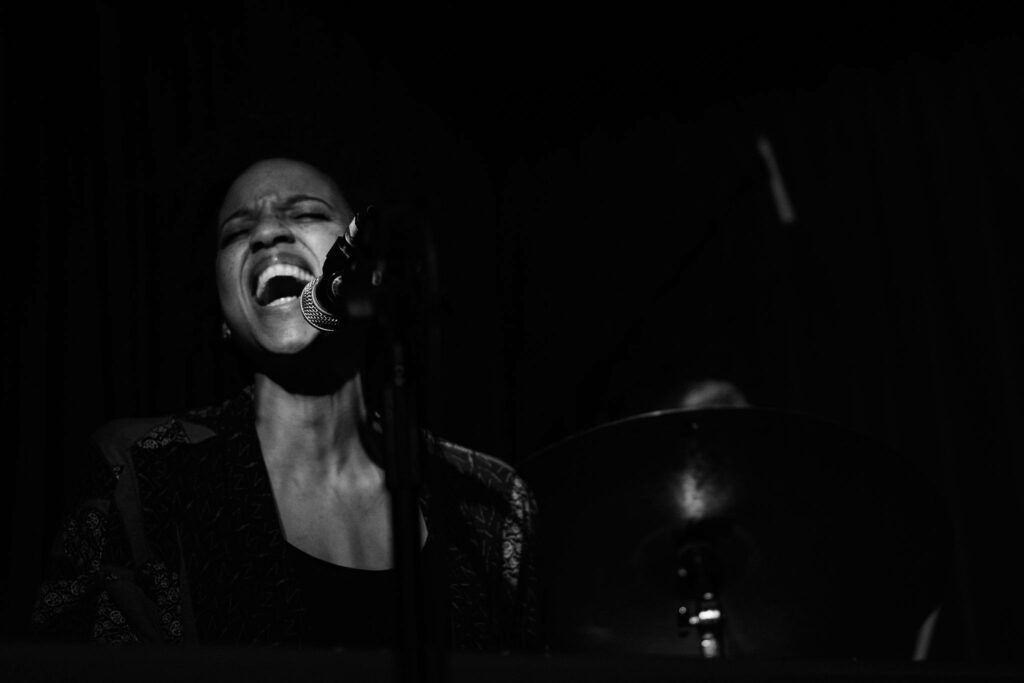
As for knowing when ‘I’ve landed it’ – I have the emotional/intuitive side of writing music, i.e. does it feel right to me?. Then I have the very forensic producer side of me which has nothing to do with my feelings and more to do with whether something ‘works’ or not.
I also worked closely with my recording engineer Sean Woodlock of Hackney Road Studios as a second pair of objective ears. He was very good at saying “no, I don’t like it” or “it’s too much”. One of the things he would often do is tell me to take something out – you know, how do you ‘serve’ the song? Sometimes you like something but it doesn’t need to be in there.
And whilst I produced the album, I co-produced some of the tracks with the drummer on the majority of the record, Will Edwards. He loves the efficiency of pop music – 3 minute songs, done and dusted! And like Sean, was very good at saying ‘let’s sculpt these songs, let’s tidy them up, create a clearer structure’.
It’s a very ‘live’ album, and I know you flourish in that setting. Did the audience shape these songs over the years?
Thanks! Well, in terms of people’s reactions to the songs, it’s been largely positive, but then I suppose if you’re going to pay to come and see me and my band play live it’s because you want to be there! But kidding aside, I think about live performance and albums as two very different entities.
In my mind, live music is principally about the audience – that is, how do you want them to experience something in real time. I’ve been to shows where an artist plays the songs just like the album with no connection with the audience and I’ve been bored and thought to myself I could’ve stayed at home, even though I’ve loved the record. Other times I’ve been to shows that are absolutely incredible live but I don’t necessarily love the album.
“It’s hard, it’s tedious, there’s nothing romantic about it, but this is what I wanted: owning my music and shaping my career.”
So I do change songs for a live setting. It also depends on the musicians I’m playing with, and drawing out their strengths. For example a guitarist who can really ‘shred’ — you want to make the most of that live. You’re also thinking about the space. A big, crunchy rock guitar solo might be too much for an intimate venue and a quiet, folk-type song might not work in a huge space where everyone’s standing.
I also get bored of my songs and need to change up the arrangements (by the time the audience is hearing it, I’ve heard it 100s if not 1,000s of times!)
What difference did it make to have a grant from Sputnik?
Sputnik helped massively – thank you! That grant helped pay to record a song (although not on the album, it’s been mixed and mastered and will be released at some point). It’s the only organisational funding I’d received and psychologically it goes some way to believing that other people, besides your friends and family like what you do!
The album’s not been out long — what happens next?
The album was released worldwide but I launched it in South Africa (I’m half South African). I did it because I wanted to do something different, showcase my music to different audiences. We’re now marketing the record, shows, interviews (like this one!) that kind of thing. And then I’m writing new music, which is enjoyable for me and building on my musicianship skills, more practice, setting new musical goals for myself.
What are the biggest challenges in your industry at the moment, as a writer and performer?
The music industry is a business, it has nothing to do with the love of music, not really. There are of course people who work in the industry who absolutely love music, I’m speaking about the structure itself. The streaming platforms and the focus on AI that is all about money and nothing to do with creativity – it’s a challenge.
Years ago when I started in this world and I had a manager, we had all those meetings with big songwriters and a major label with the view of signing a record deal. But I remember being in a meeting, listening to this record exec ‘schmooze’ me with promises of fame and fortune and I knew I couldn’t do it, those were not my values.
I should probably mention that before I became a full time musician I trained as a human rights lawyer so I have a bent for justice. And so listening to this man talk, I thought to myself this label will make me write music I don’t want to write so that I get hits; I’ll have to dress how i don’t want to dress; they’ll take my masters and earn more from me even though I’ll be putting in all of this work… and it just felt wrong, and so I set up my own label.
I do want to be clear, this model isn’t for everyone. I didn’t have a desire to write mainstream popular music, if you want that, the rules are different – they’re not necessarily wrong, just different. I took a harder road, and there’s nothing noble about it, it’s just the choice I made because I knew I wanted ownership of my music – I own all my masters and that really mattered to me, as I wrote it.
“I had record exec promises of fame and fortune, and I knew I couldn’t do it.”
But as I said it’s a harder (and much longer!) road and not for everyone, nor should everyone do it. I heard this fashion designer talk about the difference of being independent vs selling your rights and he said 10% of 1,000,000 is better than 100% of nothing! I think about that often because my values mean I fall into the latter category!
So yes, it’s hard, it’s tedious (I do a lot of admin!) there’s nothing romantic about it, but this is what I wanted; owning my music and shaping my career felt more important than the time it would take to get there and make money quickly – but then that’s my story and it’s certainly not for everyone!
What would you want to tell people about being a musician that they might not realise, or would surprise them?
I don’t know if it’s surprising, but it’s definitely true – someone once said to me “perseverance will get you further than talent.” You’ve just got to keep going; talent and success aren’t necessarily the same thing.
Lastly, does being an artist give you a particular perspective on faith? What do artists bring to the church?
Ooh, good question… Well, I’d say that God is Creator and therefore the benchmark of ultimate creativity. God took a thought in His heart and birthed it and made all things. And everything He made He said it was good. I often think about the fact that God could’ve made all flowers beige, without scent and all the same size giving them the same function. Yet the diversity and beauty of flora, something as mundane and abundant as a dandelion which is a weed, is still beautiful. How much more what His kids get to express of Him. We know that everything God made speaks of Him, particularly us His children. Creatives bring the dynamic expression of that to His Body.
But at the same time, I’d say that the term ‘creative’ is reductive, and a worldly one, because God has made all humans creative. So you can be an artist and classed as a creative in the traditional sense, but a maths teacher or accountant or lawyer etc etc they are also creative because it’s how we’re designed. I don’t think we’ve scratched the surface of what we’re capable of and I’m excited to see what happens – I think we can create worlds…
Find Matshidiso at matshidisomusic.com, and all major streaming platforms.
Matshidiso was speaking to Sputnik’s Art Director, Chris Donald (@chris.makes.things)


